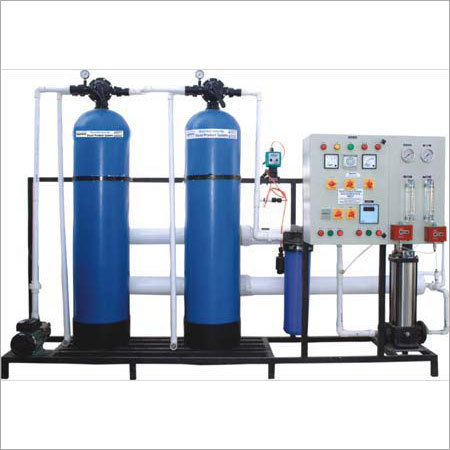
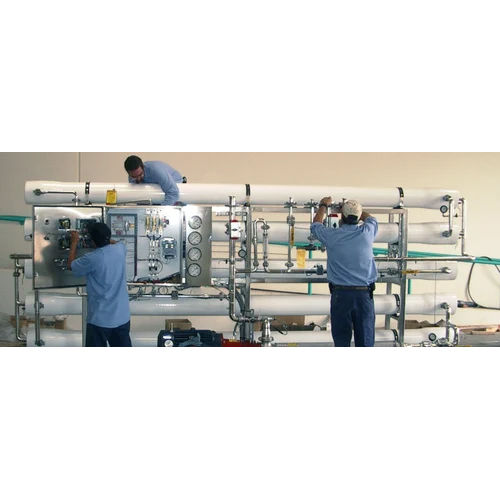
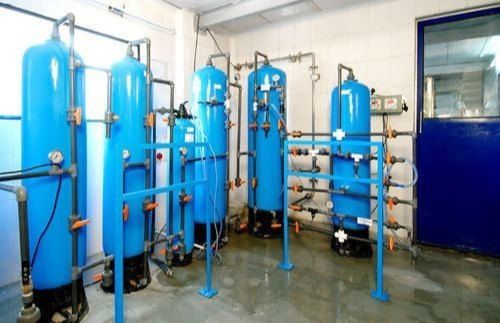
Commercial Reverse Osmosis Plant
Product Details:
- Water in conductivity <2000 S/cm
- Power Consumption 2-7 kW (depending on capacity)
- Noise Level <70 dB
- Water Out Conductivity <20 S/cm
- Recycle Rate Up to 70% depending on feed water quality
- Flow Rate Variable, 250 to 10,000+ LPH
- Frequency 50/60 Hz
- Click to View more
X
Commercial Reverse Osmosis Plant Price And Quantity
- 1 Unit
Commercial Reverse Osmosis Plant Product Specifications
- Automatic
- Borewell, Municipal, River, Industrial water
- <20 S/cm
- <70 dB
- Up to 70% depending on feed water quality
- Variable, 250 to 10,000+ LPH
- Mild Steel
- Commercial Reverse Osmosis Plant
- 2-7 kW (depending on capacity)
- Skid Mounted
- <2000 S/cm
- Drinking Water, Industrial Process, Commercial facilities
- 220-380 V AC
- Customizable based on model
- Low maintenance, energy efficient, compact design
- 250 LPH to 10000+ LPH
- Electric Motor
- Up to 99% TDS removal
- Centrifugal/Vertical multistage
- Electric
- 98%
- 50/60 Hz
- Reverse Osmosis (RO)
- 5.5 - 8.5
- Multi-stage: Sediment, Carbon, Micron, RO Membrane
- 5C to 45C
- 10-16 bar
- TFC Polyamide (Thin Film Composite)
- Customizable as per plant capacity
- Integrated recovery arrangements
- Included
- PLC-based automatic control panel
- Frame/Skid Mounted
- Onsite technical support available
- 1" to 3" (customizable)
- Blue/White/Grey or as per order
- Low pressure/trouble alarm, dry-run protection
- CIP (Clean-In-Place) provision
- Digital TDS & Pressure Gauge
Commercial Reverse Osmosis Plant Trade Information
- All India
Product Description
The basic process of Commercial Reverse Osmosis Plant uses a pump and semi-permeable membrane. The pump provides the driving force. The semi-permeable membrane passes water in preference to the solute that is dissolved in water thus the majority of solute is left behind to form a more concentrated stream. The process of Commercial Reverse Osmosis Plant is not the same as filtration. Filtration is the removal of particulates by size exclusion.
Product Details:
Product Details:
- Flow Range: 250 Liters per Hour(LPH) to 200 Kilo Liters Per Hour (KLPH)
- Material: Fiber Reinforced Plastic (FRP) / Stainless Steel (SS) / Mild Steel Rubber, Epoxy Lining (MSRL/MSEL)
- Operation: Semi - automatic / fully automatic plants, Dashboard, Reporting and Analytics (DAR) for managing multi-plant operations using Mobile, Laptop, and Tablets
- Capacity: 260 LPH to 210 Meter Cube
- Automatic Grade : Automatic
- Design : Standard
- Color : Blue
- Application : Used for industry where the purest of water is required
- Capacity : 0.5T/H to 150T/H, offer the best price base on the capacity
Advanced Membrane Technology for Optimal Purity
Utilizing state-of-the-art Thin Film Composite (TFC) Polyamide membranes under operating pressures of 10-16 bar, this RO plant ensures efficient removal of impurities, delivering water at high purity levels. The integrated design enables up to 99% TDS reduction, making it ideal for a variety of drinking and process applications across sectors.
Fully Automated & User-Friendly Operation
The system features a PLC-based automatic control panel, digital TDS and pressure display, and advanced safeguards, including low pressure/trouble alarms and dry-run protection. Its intuitive operation simplifies usage, while customizable design accommodates unique installation requirements.
Efficient, Sustainable, and Low-Maintenance
With energy-efficient motors and integrated reject water recovery, the plant maximizes resource use and minimizes operational costs. The CIP cleaning system ensures easy maintenance and prolonged membrane life, while the skid-mounted, compact build allows for flexible placement in commercial or industrial spaces.
FAQ's of Commercial Reverse Osmosis Plant:
Q: How does the Commercial RO Plant ensure high water purity?
A: The plant uses TFC Polyamide (Thin Film Composite) RO membranes, multi-stage pre-filtration (sediment, carbon, micron), and precise operating pressures (10-16 bar) to remove up to 99% of TDS and ensure water conductivity is less than 20 S/cm.Q: What are the benefits of the integrated PLC-based automatic control panel?
A: The PLC-based panel automates system operation, monitors performance, and displays real-time digital readings for TDS and pressure. It also activates safety features like alarms and dry-run protection to prevent equipment damage and ensure consistent water quality.Q: Where can this RO plant be installed and used?
A: Designed with a frame/skid for flexible placement, it suits commercial buildings, industrial plants, and facilities that rely on borewell, municipal, river, or process water. System dimensions and connections are customizable to fit site-specific requirements.Q: What is the process for cleaning and maintaining the RO plant?
A: A built-in CIP (Clean-In-Place) system facilitates periodic membrane cleaning without disassembly, supporting long-term performance. The plant's low-maintenance design and onsite technical support further ease upkeep.Q: How does the RO plant manage reject water and recovery?
A: Integrated recovery arrangements enable the recycling of up to 70% of feed water, reducing wastage and operational costs. This feature contributes to sustainable operation and better resource utilization.Q: What applications is this RO plant suitable for?
A: It's ideal for drinking water supply, industrial processing, and commercial facility requirements where reliable and safe water quality is essential. Its robust construction and versatility suit a broad range of usage scenarios.Tell us about your requirement

Price:
Quantity
Select Unit
- 50
- 100
- 200
- 250
- 500
- 1000+
Additional detail
Mobile number
Email

Other Products in 'Water Treatment Plants' category

"We are mainly dealing our products in North India"
SHIVA GLOBAL ENVIRONMENTAL PRIVATE LIMITED
GST : 07AASCS9603C1Z5
GST : 07AASCS9603C1Z5
Contact Us

- G-42, Hydro Treat House, Dilshad Colony, Delhi - 110095, India
- Phone :08045816420

- Mr Shubham Divakar (Director)
- Mobile :08045816420
- Send Inquiry
 Send Inquiry
 Send Inquiry
 Send SMS
SHIVA GLOBAL ENVIRONMENTAL PVT. LTD.
All Rights Reserved.(Terms of Use)
Developed and Managed by Infocom Network Private Limited.
Developed and Managed by Infocom Network Private Limited.

