
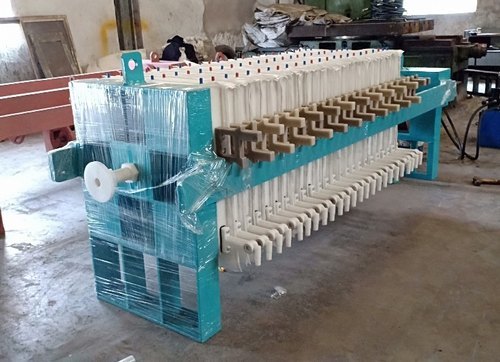
Filter Press
150000.00 INR/Unit
Product Details:
- Membrane Quantity Multiple; varies by design
- Application Solid-liquid separation in industrial processes
- Capacity Variable; depends on configuration
- Membrane Size Standard sizes range from 500 mm to 1200 mm
- Material Stainless steel and polypropylene
- Product Type Filter Press
- Technology Membrane filtration
- Click to View more
X
Filter Press Price And Quantity
- 150000.00 INR/Unit
- 1 Unit
Filter Press Product Specifications
- Membrane filtration
- Manual or semi-automatic
- Filter Press
- Approximately 800 kg
- Standard sizes range from 500 mm to 1200 mm
- Approximately 3000 x 1200 x 1500 mm (estimated)
- Stainless steel and polypropylene
- 1 year
- Hydraulic or electrical
- Multiple; varies by design
- Solid-liquid separation in industrial processes
- Variable; depends on configuration
- Up to 16 bar
- Teal and white
Product Description
Our company produces a range of industrial plants and equipment. One of the equipment is filter press. This equipment works to separate liquid and solid. This equipment makes use of pressure filtration technique for this job. When slurry is fed into this equipment, the water is separated under pressure. The affordable filter press operates without causing any trouble. Filter plate and filter cloth are some of the main components of filter press. This equipment is demanded in wastewater, food & beverage, chemical, cement, power generation and other industries.
Precision Filtration for Industrial Demands
Designed for rigorous solid-liquid separation, this filter press excels in chemical, pharmaceutical, and wastewater treatment industries. With configurable capacities and membrane options, it provides flexible solutions tailored to unique process requirements. Its durable frame and advanced membrane technology ensures consistent results, making it a trusted choice for industrial environments.
Flexible Operation and Robust Construction
Choose between manual or semi-automatic operation to suit your workflow. The combination of stainless steel and polypropylene offers resilience and ease of maintenance. Whether powered hydraulically or electrically, the press assures safety and efficiency under pressures up to 16 bar, delivering optimal filtration performance.
FAQ's of Filter Press:
Q: How does the filter press operate for solid-liquid separation?
A: The filter press utilizes membrane filtration technology. It applies pressure, up to 16 bar, to pump slurry into chambered membranes. The liquid passes through the filters, leaving solids behind, which can then be removed for further processing or disposal.Q: What are the benefits of using a stainless steel and polypropylene filter press?
A: Stainless steel provides strength and corrosion resistance, ideal for harsh industrial environments. Polypropylene adds chemical resistance and maintains lightweight durability, contributing to longevity and easy cleaning.Q: When should I choose a manual versus a semi-automatic operation type?
A: Manual operation is ideal for smaller batches or when budget constraints are a priority. Semi-automatic modes suit larger operations needing quicker cycle times and reduced manual intervention, increasing productivity and safety.Q: Where can this filter press be installed and what industries benefit most?
A: This filter press is suitable for installation in chemical plants, food processing units, pharmaceutical factories, and wastewater treatment facilities. It's exported and supplied throughout India by experienced manufacturers and service providers.Q: What is the process for configuring membrane quantity and size?
A: Membrane quantity and size can be selected based on your capacity needs and slurry properties. Standard membrane sizes range from 500 mm to 1200 mm, allowing customization for optimal throughput and cake dryness.Q: How is the filter press maintained and what support is provided?
A: Routine maintenance involves checking seals, membranes, and hydraulic systems. The press comes with a 1-year warranty, and manufacturers offer after-sales support including spare parts and technical service.Q: What are the typical usage scenarios and results expected from this equipment?
A: This filter press is commonly used for dewatering sludge, clarifying liquids, and recovering valuable solids. Operators can expect efficient separation, reduced waste, and clear filtrate suitable for reuse or discharge, enhancing overall process efficiency.Tell us about your requirement

Price:
Quantity
Select Unit
- 50
- 100
- 200
- 250
- 500
- 1000+
Additional detail
Mobile number
Email

Other Products in 'Effluent Treatment Plant' category

"We are mainly dealing our products in North India"
SHIVA GLOBAL ENVIRONMENTAL PRIVATE LIMITED
GST : 07AASCS9603C1Z5
GST : 07AASCS9603C1Z5
Contact Us

- G-42, Hydro Treat House, Dilshad Colony, Delhi - 110095, India
- Phone :08045816420

- Mr Shubham Divakar (Director)
- Mobile :08045816420
- Send Inquiry
 Send Inquiry
 Send Inquiry
 Send SMS
 Call Me Free
SHIVA GLOBAL ENVIRONMENTAL PVT. LTD.
All Rights Reserved.(Terms of Use)
Developed and Managed by Infocom Network Private Limited.
Developed and Managed by Infocom Network Private Limited.

