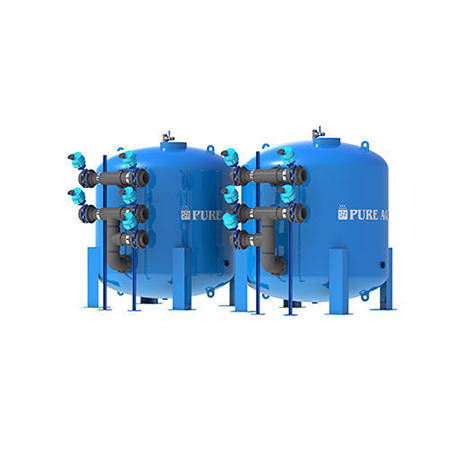
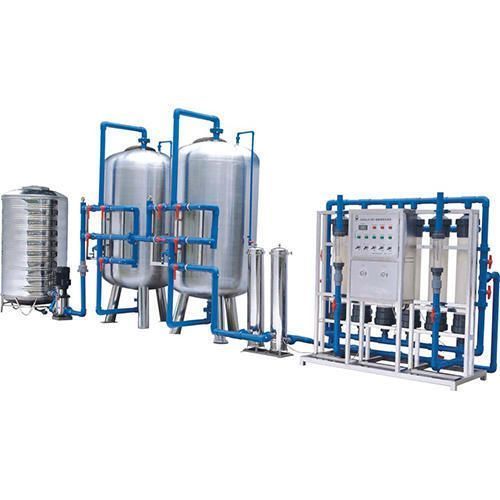
Industrial Water Purification Systems
110000.0 INR/Piece
Product Details:
- Usage & Applications Industrial, Commercial Water Treatment
- Water in conductivity 1000 S/cm
- Power Consumption 2-7 kW (Depending on Capacity)
- Pump Type High Pressure Pump
- Feature Corrosion Resistant, High Efficiency, Durable, Low Maintenance
- Technology Reverse Osmosis (RO), UF, UV, Multi-Stage Filtration
- Efficiency (%) Up to 99%
- Click to View more
X
Industrial Water Purification Systems Price And Quantity
- 110000.0 INR/Piece
- 1 Piece
Industrial Water Purification Systems Product Specifications
- Up to 99.5%
- Reverse Osmosis (RO), UF, UV, Multi-Stage Filtration
- Up to 99%
- Multi-Stage, RO, Pre & Post Filtration
- 50-60 Hz
- Ground Water, Borewell, Municipal Supply
- Variable, as per capacity
- Automatic
- 10 S/cm
- Up to 70%
- 60 dB
- 6.5 - 8.5
- 220-380V
- Floor Mounted
- Industrial, Commercial Water Treatment
- Up to 10000 L
- 1000 S/cm
- 1000-10000 LPH
- 2-7 kW (Depending on Capacity)
- Industrial Water Purification Systems
- Stainless Steel/FRP
- Electric Motor
- Corrosion Resistant, High Efficiency, Durable, Low Maintenance
- High Pressure Pump
- Electric
- Modular Skid Mounted
- 8-20 bar
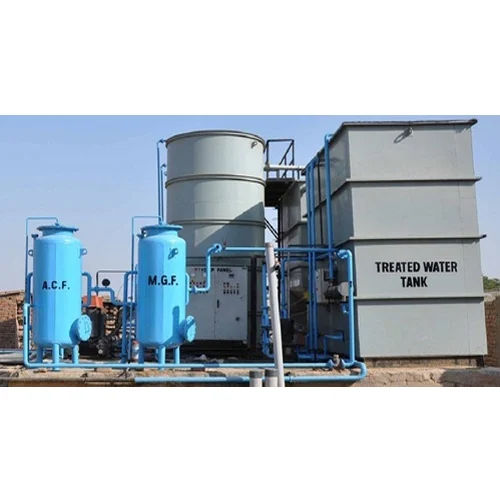
- Sand Filter, Activated Carbon Filter
- UV Sterilization, Ozonation (Optional)
- Automatic CIP (Clean-In-Place)
- 5C - 45C
- HDPE / Stainless Steel
- 1-2 Inch
- PLC Based Automatic Control Panel
- Customizable as per requirement
- ISO 9001, CE Certified
Industrial Water Purification Systems Trade Information
- 1 Piece Per Month
- 1 Week
Product Description
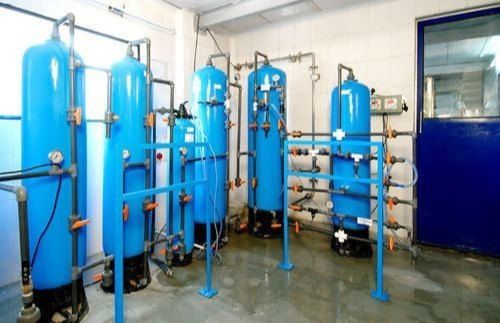
We provide comprehensive Industrial Water Purification Systems for water purification, filtration, treatment, and softening. This range offers multigrade sand filters, hydraulic filter presses, iron removal filters, and many other similar products. Flow rates in these systems are higher than down-flow filters that adhere to formulas. This is a crucial consideration, which can help to conserve space and money. Furthermore, our Industrial Water Purification Systems are less time-consuming to install. Therefore, if we employ that process, the time required to finish the project will be reduced. This innovation and latest material make systems with a lower need for backwash water. Raw water is commonly used for backwashing in these filtration systems.
Product Details:
- Product Name : Industrial Water Purification Systems
- Installation Services Required : Yes
- Type : Automatic, Manual, Semi-Automatic
- Type Of Machines : RO, UV, Sand Filtration, Ultra Filtration
Features:
- Excellent finish
- Opulent working
- Excellent fittings
- Smooth Working
Comprehensive Multi-Stage Purification
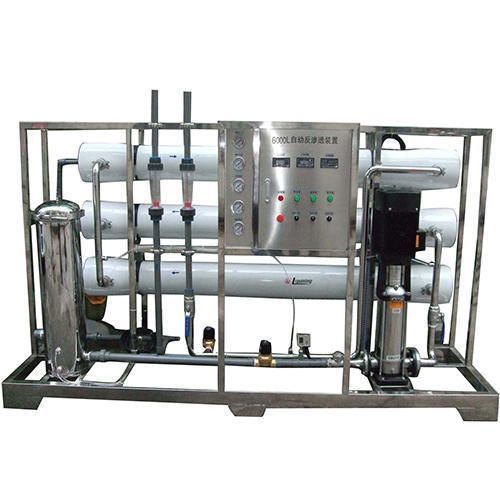
This system integrates sand and activated carbon pre-filters, followed by reverse osmosis (RO), ultrafiltration (UF), UV sterilization, and an optional ozonation step. Modular skid mounting allows tailored installation to match any workspace, and automated PLC controls ensure reliability and ease. Suitable for groundwater, borewell, or municipal supply, it meets rigorous purity requirements for industrial and commercial water treatment applications.
High Efficiency and Sustainability
Designed for a high recycle rateup to 70%this solution minimizes water wastage while controlling conductivity to 10 S/cm. Automatic CIP cleaning and power-efficient electric operation reduce downtime and lower operational costs. The selection of robust stainless steel or FRP materials ensures longevity, while ISO 9001 and CE certifications guarantee quality and safety.
FAQs of Industrial Water Purification Systems:
Q: How does the PLC-based automatic control panel enhance system operation?
A: The PLC-based automatic control panel enables precise management of the purification process, automating key functions such as flow, pressure regulation, backwashing, and cleaning cycles. This ensures consistent output quality, boosts system reliability, and minimizes manual intervention, making the operation more efficient and user-friendly.Q: What advantages does modular skid-mounted design offer for installation?
A: The modular skid-mounted design allows the system to be rapidly deployed or relocated as needed, simplifying installation and integration at your site. Its customizable dimensions ensure seamless fitment to available space, making it ideal for a diverse range of industrial and commercial facilities.Q: When should UV sterilization and ozonation be used in water treatment?
A: UV sterilization is employed as a post-treatment step to neutralize microorganisms and ensure microbiological safety. Ozonation, which is optional, can be added for advanced disinfection or removal of trace organic compounds when higher levels of water purity or specific treatment outcomes are required.Q: What is the process flow of water treatment in this system?
A: Water passes through pre-treatment filters (sand and activated carbon) to remove particulates and chlorine, then advances to reverse osmosis and ultrafiltration for dissolved solids reduction. Afterwards, UV sterilization (and optional ozonation) ensures microbial safety before the final purified water is collected in storage tanks. The entire sequence is managed automatically.Q: Where can this water purification system be applied?
A: This solution is suited for industrial and commercial venues requiring high-purity water, including manufacturing plants, food and beverage units, pharmaceuticals, and service providers who depend on groundwater, borewell, or municipal supplies.Q: How does the automatic CIP cleaning method benefit system maintenance?
A: Automatic CIP (Clean-In-Place) enables thorough internal cleaning of the filtration components without dismantling the system. This reduces downtime, extends equipment life, and maintains consistent purification performance, all while minimizing manual maintenance effort.Tell us about your requirement

Price:
Quantity
Select Unit
- 50
- 100
- 200
- 250
- 500
- 1000+
Additional detail
Mobile number
Email

Other Products in 'Water Treatment Plants' category

"We are mainly dealing our products in North India"
SHIVA GLOBAL ENVIRONMENTAL PRIVATE LIMITED
GST : 07AASCS9603C1Z5
GST : 07AASCS9603C1Z5
Contact Us

- G-42, Hydro Treat House, Dilshad Colony, Delhi - 110095, India
- Phone :08045816420

- Mr Shubham Divakar (Director)
- Mobile :08045816420
- Send Inquiry
 Send Inquiry
 Send Inquiry
 Send SMS
SHIVA GLOBAL ENVIRONMENTAL PVT. LTD.
All Rights Reserved.(Terms of Use)
Developed and Managed by Infocom Network Private Limited.
Developed and Managed by Infocom Network Private Limited.

